Welcome to the second edition of Daktela SLA - Senior Leaders Answers
When we launched this series, the idea was simple: instead of guessing where customer support is heading, we ask the people who are actually building it. Real answers, from real operators, on the questions that matter to anyone running a contact center today.
The first conversation was with Mihai Nica, who shared his view on the Romanian market. This time we are going straight to the top of our own house.
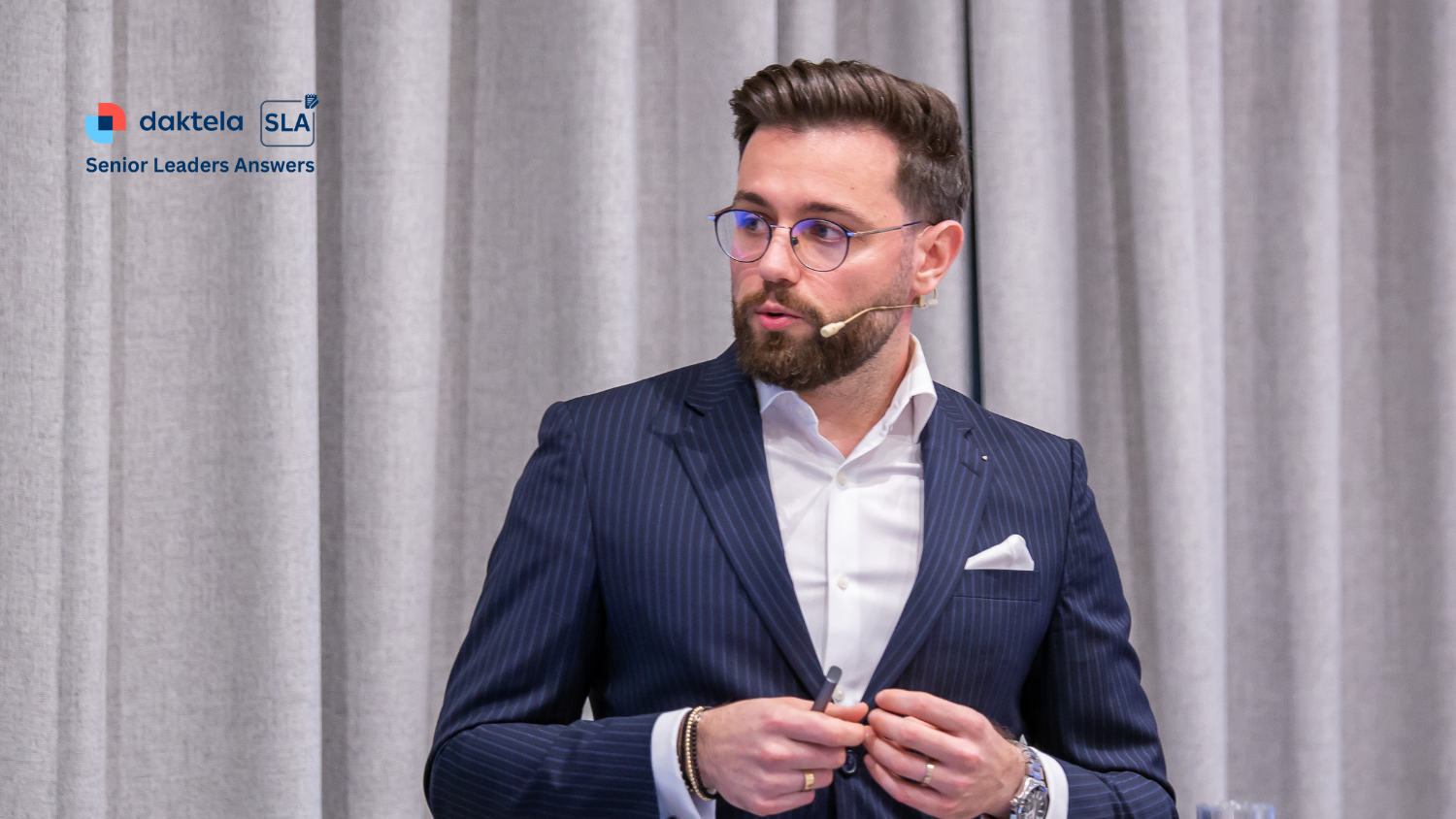
Jiří Havlíček joined Daktela in 2018 in Customer Success, moved on to CTO, and has been CEO since February 2024. Under his leadership the group grew from €7M to €20M in revenue, at a steady 30% year over year, and now operates across 8 European markets. He is also one of the few CEOs in this industry who has personally answered customer tickets, which shows in how he talks about the product.
We covered a lot of ground: why Daktela embedded AI natively into its platform back in 2023, well before most global CCaaS players; what an AI-native contact center actually looks like versus one with AI bolted on the side; whether European data residency is a genuine competitive moat or just a marketing story in a post EU AI Act world; and the single most common mistake companies make when implementing AI in customer care.
The goal of this series stays the same: to keep our clients, partners and everyone working in this industry informed by people who deal with these decisions daily, not quarterly.
Here is the full conversation.
Every role gave me a working knowledge of what the processes actually look like from the inside, and what it takes to run them. Customer Success is uniquely universal in that respect. You do consultations, support, a bit of sales and a bit of development, all in the same week. The CTO years were narrower and deeper, which matters enormously in a product-led company, because most of our strategic decisions are ultimately technical decisions.
As for having answered tickets, it means I can't be sold a story about our own product. When someone tells me a workflow is simple, I know whether it is, because I've done it in the evening with a customer waiting to have it deployed in the morning. Climbing the organisation from the bottom up would be my recommendation for a proper CEO story.
I was going through our HR statistics recently and was surprised to find that half the company is now younger than me, assuming you are willing to call me young. That brings a lot of flexibility and an appetite for learning, which I value far more than a bench made up exclusively of senior veterans.
The honest answer, though, is that it is a mix, and the mix is deliberate. Telecom experience is not optional in this business, and we have plenty of it in the places where it counts. What the younger profile changes is speed. There are fewer layers between noticing something in the market and doing something about it, so decisions that would take another company a quarter take us days. In a market where the technology genuinely changes every few months, that is not a cultural preference. It is a requirement. A company that has to convene three committees before it can change a roadmap cannot operate here.
It was an evolution, not a revolution. Just before AI became the hype it is now, NLP was the next big thing, and the market trend was clearly towards building automation bots on intent recognition. That was the thinking behind the acquisition that is now our AI subsidiary. So when the AI boom arrived, we already had a flexible vehicle and a team that understood the problem. We could steer the focus rather than start building from nothing.
What nearly three years in production teaches you is mostly humbling. The model was never the hard part. The data, the integrations and the process design around the AI are the hard part, and they are the reason most projects run late. AI is being adopted heavily and, at the same time, the market is sobering up. People are finally looking for the practical use cases rather than the demo. Software development and customer care automation are where those cases are clearest, and that is not a coincidence. Both are high volume, well documented and easy to measure.
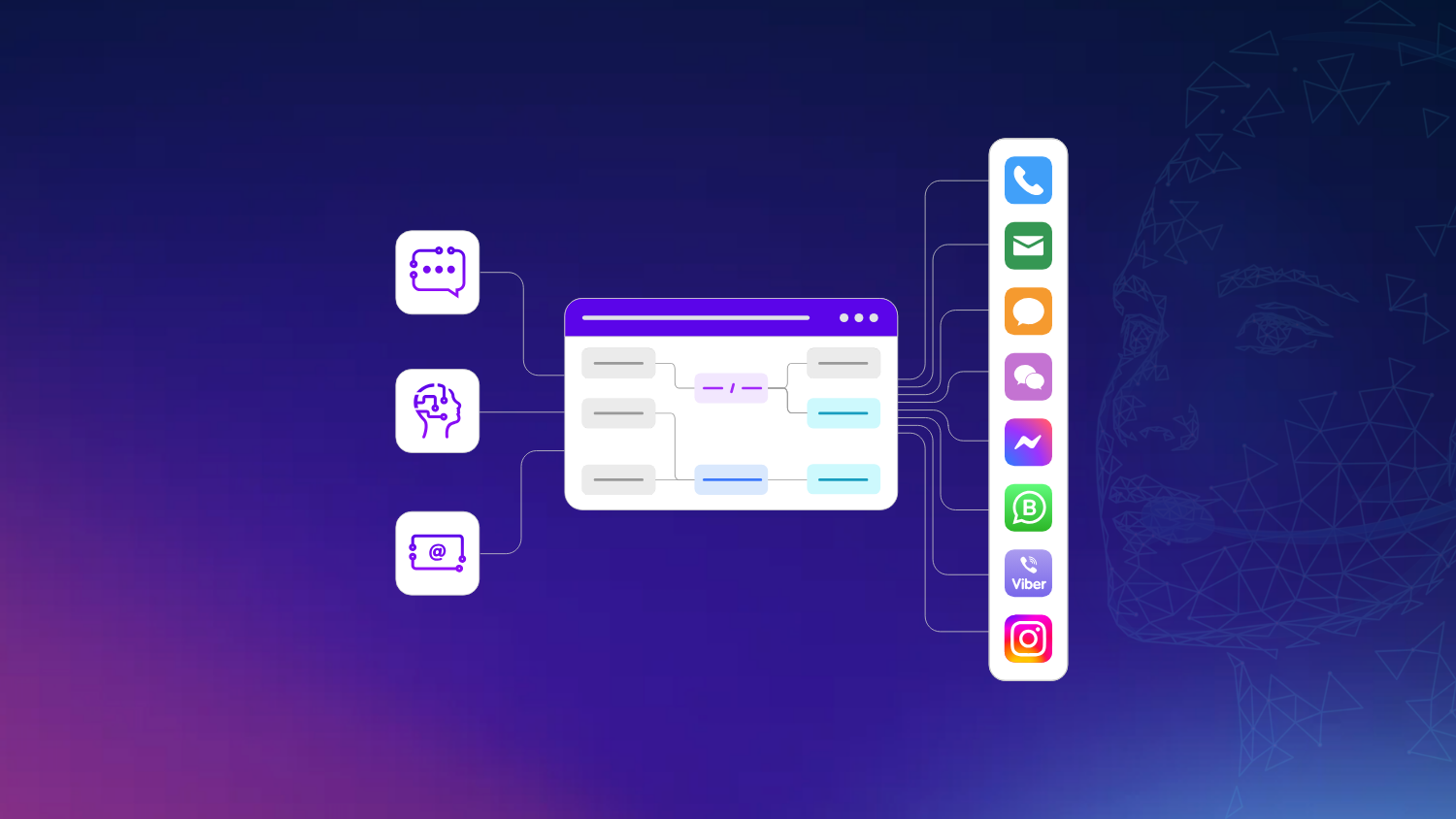
We see high demand for fully integrated, AI-native contact center solutions, and the pull towards real integration is getting stronger. The test is simple. Does working with the AI inside the contact center feel natural, with no interruptions, no switching between products and no gaps in the data?
The tells for a bolted-on solution are always the same. Your agents flip between two interfaces. Conversations the AI handled are missing from the contact center app. Reporting covers one world but not the other. You end up with your agents acting as the integration layer, carrying context between two systems by hand, and that cost never appears in the business case for the AI.
In Daktela CC we have closed that gap. The AI platform is a native and natural part of the contact center rather than a companion product sitting next to it. Our new interface, Daktela Neo, has passed 100 live customers, and the recent releases put AI directly into that flow rather than beside it.
If anything here is counter-intuitive, it is that there was no counter-intuitive decision. People expect a single clever move. The reality is much more straightforward. You need a really good product backed by smart people. Then you build the right teams under the right leaders and point them all in the same direction with a performance system. It is unglamorous, and it compounds. The part I would actually draw attention to is that we have been able to add revenue without a corresponding increase in cost. That is the whole game.

These markets are close relatives of our home turf in Czechia and Slovakia, so the commercial model we developed at home transfers well across the region. The market specifics are where it gets interesting, and they show up as very concrete feature requests rather than as differences in strategy. A market will ask for one local integration or one regulatory report that nobody at home has ever needed, and that single item decides the deal. Having our own product is the reason we can say yes to those local requests and adapt quickly.
To answer that directly, it is a real moat, but not for the reason it usually gets sold.
The marketing story is a map with a data center pinned on it. That part is easy to copy, and every large American vendor now has an EU region. The moat is in what follows from actually being a European company. Where the data sits is one question. Who can legally compel access to it is a different and more important one, and that is not a feature a vendor can ship in a release. In the past few years EU data residency has moved from a procurement checkbox to a board-level question, for customers in the EU and in the UK alike. It now comes up early in the process rather than as a late legal review.
The EU AI Act pushed this further by turning compliance into a product requirement rather than a legal appendix. Transparency about when a customer is talking to a machine, traceability of automated decisions and genuine human oversight in automated flows are all things you have to design in, not document afterwards.
Regional sovereignty is going to matter more, not less. Having been European from the start is not a positioning exercise for us, and our primary European focus is a clear advantage with our target audience.
The hardest call was to rebuild rather than reskin. A visual refresh would have been safer and considerably cheaper, and it would have left the underlying model of how you work in the platform untouched, which was the actual problem. Choosing the rebuild meant accepting that we would break the muscle memory of our most experienced users, the people who know the old interface better than we do. That is a real cost and there is no clever way around it.
So the UX team had a lot of difficult calls to make, and we spent a great deal of time talking to end users and customers before drawing anything. The result is a complete rethink of how you work with the platform, and the latest versions add serious native AI capability on top of it.
The most common mistake is starting without a definition of success. If you have not decided what the AI is supposed to change, you cannot tell whether it worked, and the project review turns into an argument about expectations that nobody wrote down. That single omission causes more failed AI projects than any technical problem does.
Real AI ROI depends on what the business actually needs and on which targets are credible. Most customers work with a target automation percentage, either full end-to-end automation of a specific conversation type or a reduction in handling time where the AI does the mechanical part and the agent keeps the judgement. The projects that land are the ones that pick a well defined conversation type and finish it.
Customer care will certainly become fully AI-native, to the point where whether AI is part of your contact center stops being an interesting question. As a ballpark figure, let us say half of the mundane communication will be fully automated, and the human workforce will focus on the other half with real attention to the quality of the experience, assisted by AI technologies that speed up their work.
What disappears is the tedium. Retyping data between systems, after-call notes, manual categorisation, first-line triage, and reading a knowledge base while somebody waits on the line. I also hope the industry's fixation on average handling time as a headline metric disappears with it, because it is the wrong thing to optimise once the mechanical work is gone.
What appears is a different job description. The agent moves closer to a specialist handling the cases that genuinely need a person, and that means different hiring and different training. Alongside it comes an operational discipline that nobody has fully worked out yet, namely who is accountable when the AI gets something wrong and how you audit that after the fact.
What stays exactly the same is the reason any of this exists. A customer with a real problem still wants to feel that a competent person has taken responsibility for it. That has not changed in the twenty years we have been in this industry and it will not change in the next three.
That is usually driven by one's hobbies, so in my case it is easy. Airline pilot, without hesitation. It is a job built entirely on systems, procedure and judgement under pressure, which is oddly close to what I already like about running a company, except with a much better view from the office.
The one I could not survive is anything in pure administration, where the output is a document that nobody ever acts on. Not because it is hard, but because I would last about a day in any role where you cannot move things forward. I need to be able to see that something changed because I was there.