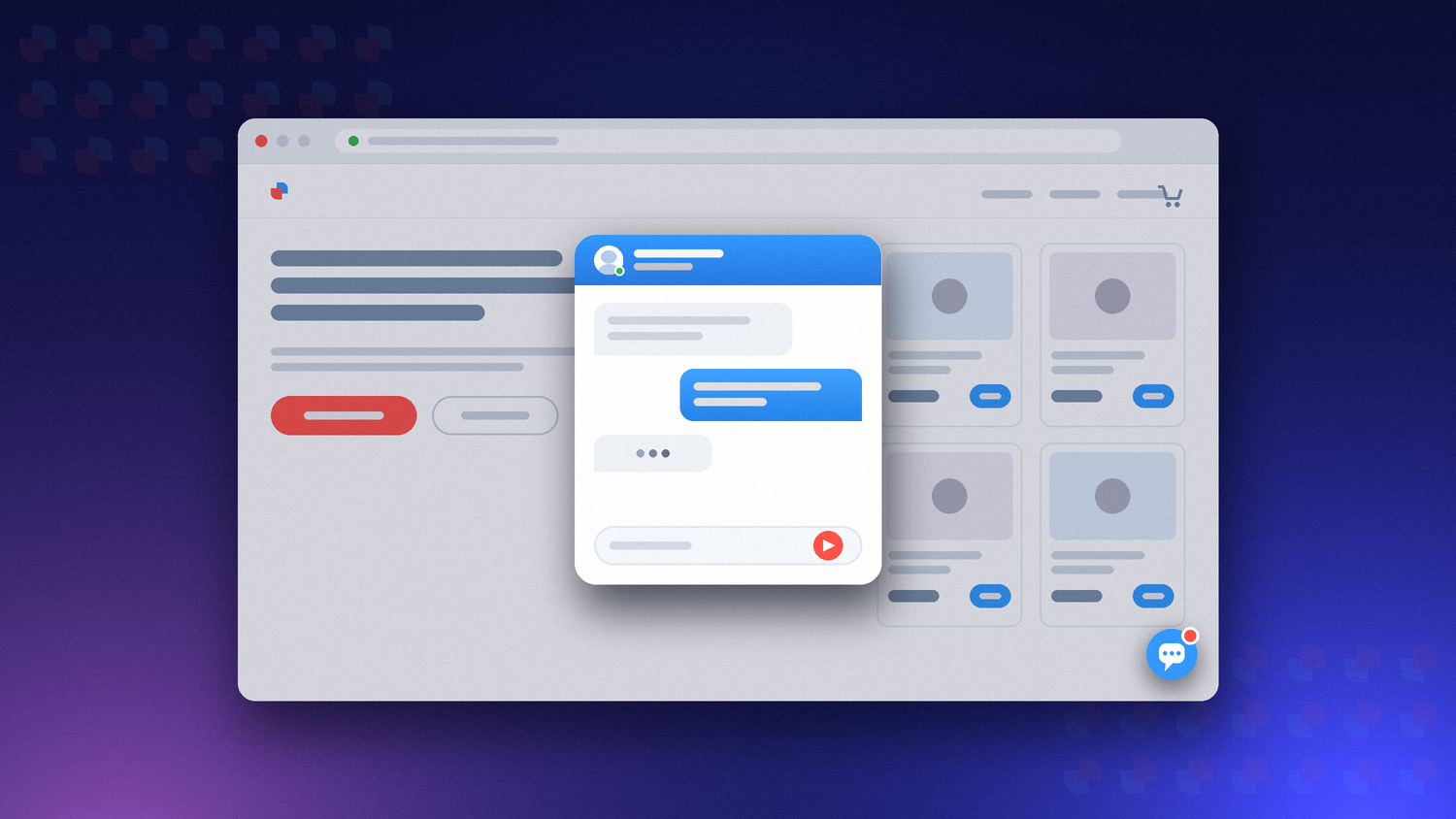
Does adding online chat to your website actually increase sales?
Yes. The benchmark across industry research is a 20% lift in conversions after adding live chat, with chatters converting 2.8 times more often than non-chatters. That is the short answer. The rest of this article explains where those numbers come from and how to capture them in practice.
Most conversion projects start with redesigns, new landing pages or bigger ad budgets. Online chat for your website is cheaper, faster to deploy and directly addresses the biggest silent conversion killer: unanswered questions at the moment of purchase. Every question a visitor cannot resolve on the page is a potential exit.
Definition: Live chat (also called website chat, online chat or web chat) is a real-time messaging window embedded directly on a website. It lets visitors talk to a human agent or an AI chatbot without leaving the page they are on, so questions get answered inside the buying journey instead of parallel to it, as happens with email or phone.
The problem it solves is timing. A visitor comparing two products at 9 PM will not send an email and wait until tomorrow. They will either get an answer now or leave. Invesp data confirms the stakes: 44% of online consumers consider a live answer mid-purchase one of the most important features a website can offer, and 77% of customers say they will not buy at all if live chat is missing.
The problem: hesitation kills the sale. The solution: answer the question on the page, in the moment.
Live chat typically increases website conversions by 20% (Invesp). Behind that average sit three separate revenue effects, each documented with hard numbers:
| Effect | Metric |
|---|---|
| Higher conversion probability | Chatters convert 2.8x more often than non-chatters |
| Higher order value | Chatters spend 60% more per purchase |
| Direct sales attribution | 38% of customers bought because of a good chat session |
| Lead generation | 42% prefer chat for sharing contact details, top lead channel |
| Repeat visits | 63% more likely to return to a site with live chat |
Why does one widget move all three levers at once? Because chat operates at the point of decision. An agent can resolve an objection (conversion), recommend a better-fitting or complementary product (order value) and capture the contact if the visitor is not ready to buy (lead generation), all in a single conversation.
Visitors who use live chat are 2.8x more likely to convert and spend 60% more per purchase than visitors who do not chat.
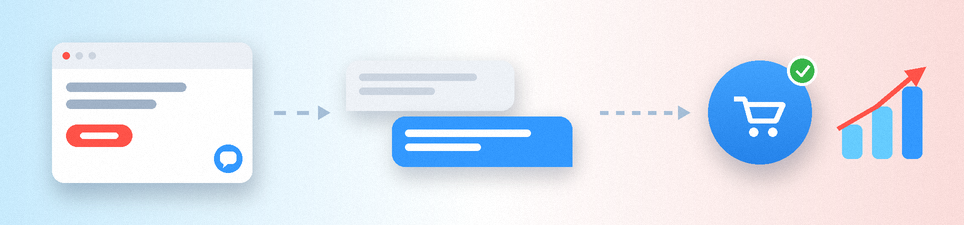
Customers prefer live chat because it is immediate: 79% choose it to get answers right away, and it delivers the highest satisfaction of any support channel. Invesp reports a 92% customer satisfaction rate for live chat, with 73% of customers rating it the most satisfying way to communicate with a business, compared to 51% for email and 44% for phone.
The full list of reasons customers give is practical, not emotional:
| Reason for preferring live chat | Share of customers |
|---|---|
| Questions answered immediately | 79% |
| Ability to multi-task while chatting | 51% |
| Most efficient communication method | 46% |
| Better information than by email | 29% |
| Dislike of phone calls | 22% |
| Can chat while at work | 21% |
| Better information than by phone | 15% |
"Customers no longer compare you with your competitors. They compare you with the fastest answer they got anywhere. Chat is how a website keeps up with that expectation."
Jiri Havlicek - Daktela CEO
The rule: a chat widget nobody answers damages trust more than no chat at all. The goal is the 20% conversion lift, not a new backlog. Five steps keep the rollout under control:
| Criterion | Live chat | Phone | |
|---|---|---|---|
| Customer satisfaction | 73% | 51% | 44% |
| Response speed | Seconds | Hours to days | Minutes (with queue) |
| Happens inside the buying journey | Yes, on the page | No | No |
| Multi-tasking possible for customer | Yes (51% value this) | Yes | No |
| Agent can handle in parallel | Multiple chats | Multiple emails | One call |
| Lead capture preference | 42%, highest | Lower | Lower |
(Source: Invesp live chat statistics)
Live chat is one of the few single changes that improves conversion rate, order value and loyalty at the same time: a typical 20% conversion lift, chatters who are 2.8x more likely to buy and spend 60% more, and 63% of consumers more willing to return.
The condition is operational. Chat converts only when it is answered fast, routed intelligently and connected to the rest of your customer communication.
Daktela is an omnichannel customer communication platform that brings web chat, AI chatbots, phone, email, WhatsApp and social media into one place. Every chat arrives with full customer history, Daktela AI handles the repetitive first line, and no conversation goes unanswered. That turns the chat widget from a support cost into a measurable revenue channel.
Actionable next step: add chat to your three highest-intent pages, set a 30-second response standard, and measure chatters vs. non-chatters for 30 days. Or let us show you how it works first.
Real-world proof: after centralizing communication with Daktela and adding an AI chatbot as the first line, retailer Sportisimo now handles 32% fewer calls, because part of the inquiries are resolved directly in chat. More examples are available in Daktela customer stories.


.webp)
.png)