The best AI chatbot for customer support is not a particular product. It is one that understands questions in your language, can hand a conversation over to a human agent with its context intact, and fits your budget. This article explains what today’s AI chatbots can realistically do and how to assess whether a chatbot understands Czech well. It also covers why a smooth handoff to an agent matters, what makes up the cost of implementation, and what to avoid when choosing a solution. It draws on Daktela’s own survey of customers in Czechia and Slovakia, SurveyMonkey data, real deployments for Czech customers, and Daktela’s current price list.
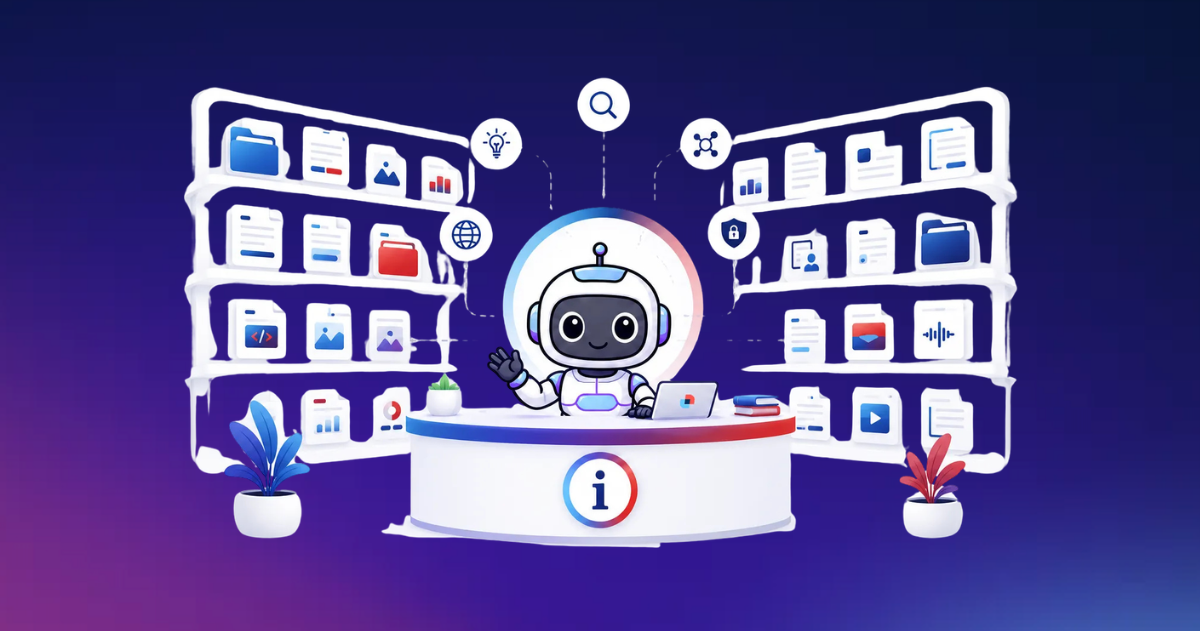
The basic distinction is simple: some chatbots follow fixed scripts, while others understand natural language.
A rule-based chatbot uses predefined buttons and branching paths. It can handle a limited set of questions, but it cannot respond when a customer goes off script.
An AI chatbot built on a large language model (LLM) can understand questions outside a predefined decision tree and respond to unexpected wording. Before answering, it retrieves relevant information from your knowledge base using a technology called RAG. This means its answers draw on your current materials rather than generic responses.
The difference shows in the results. A well-implemented AI chatbot can resolve a large share of recurring queries on its own, handling work that would otherwise fall to a human agent. At Slevomat, the chatbot resolves up to 73% of requests without an agent. Your results will depend mainly on the quality of the information you provide and how clearly you define the tasks the chatbot should handle.
When choosing a chatbot, check how well it understands everyday Czech. Many solutions were developed primarily for English. They may handle a question written in standard Czech but struggle with typos, colloquial expressions, grammatical inflections, or a mix of languages in the same sentence.
The only way to find out how well a chatbot understands Czech is to test it with real queries. Before making a decision, give it dozens of actual questions from your support team, including informal and ambiguous ones, and see how many it understands correctly on the first try.
Test with your own data, not prepared examples. Every solution can handle a scripted demo. The differences become clear when you use questions customers actually ask. Take five to ten real messages from last week, including those that are worded unclearly, and try them in the demo yourself.
Where the chatbot gets its information matters too. Even perfect Czech is of little use if the bot cannot access your up-to-date knowledge base. Language understanding and the quality of its source material go hand in hand.
Handing a conversation over to a human agent is an essential part of a well-configured chatbot. Customers are comfortable with automation as long as they know they can reach a person when they need to.
The data supports this. In a Daktela survey of 500 customers in Czechia and 500 in Slovakia, 43–44% said they had had to explain the same issue repeatedly in the past six months after being transferred to another department or channel. More than half found this very frustrating, and for more than 60%, it significantly reduced their willingness to return to the company. When a chatbot hands over a conversation, the agent should therefore receive its full context so the customer does not have to start again.
Customers do not want to do away with automation. They want to know there is a way to reach a person. According to a SurveyMonkey survey, 89% of people believe companies should always offer that option. The most common complaint about chatbots is not that they feel impersonal, but that they fail to understand the customer. Both findings point to the same conclusion: what matters is how well the chatbot understands people and whether a human agent is available, not simply whether a company uses AI.
A poor handoff can also increase costs. If the bot cannot resolve a query and offers no way to reach a person, the customer may try again through another channel—and one query turns into three. That is why a smooth handoff matters. Track how many conversations end up with an agent and how many customers get back in touch about the same issue within two days. The second figure can tell you more about the quality of the deployment than the resolution rate alone.
The solutions on the market fall into three broad categories. These are different approaches rather than specific brands, and each has its strengths and weaknesses.
A standalone chatbot is a quick, low-cost option for answering simple FAQs on your website. Its limitations often include a restricted handoff to a human agent and no visibility into other communication channels.
A chatbot integrated into a contact centre has access to the same customer history as the phone and email channels. Agents can see the full conversation regardless of how the customer got in touch, and reporting works across channels. This approach suits companies with a customer support team that communicates with customers through multiple channels.
Custom development offers the most flexibility, but requires a substantial upfront investment and more time. It makes sense for companies with specific requirements and larger budgets.
Whichever approach you choose, ask the provider these five questions:
The cost of an AI chatbot depends mainly on volume—the number of conversations per month—rather than a licence fee for the bot itself. Licences for the agents who take over chats are usually another cost.
As a guide, Daktela’s pricing is as follows:
A web chat licence costs an additional CZK 350 per user per month.
Your total cost should also account for items that do not appear in the price list: preparing and maintaining the knowledge base, setting up the chatbot’s workflows, and making ongoing improvements. These are the factors that determine whether the investment pays off.
The return on investment can be measured. Seznam.cz reduced its customer support costs by 30% with an AI chatbot. To assess the potential value for your business, compare the chatbot’s monthly cost with the time your team currently spends on recurring questions. We explain how to measure performance properly in a separate article on chatbot success metrics.
A bot with no way to reach a person. If the chatbot cannot resolve an issue and offers no option to contact an agent, the customer may leave. According to Daktela’s survey, this is the most common reason customers leave. Make sure they can easily reach an agent at any point in the conversation.
Czech support that looks good on paper. Do not rely on what a provider says in its proposal. Test the chatbot with real Czech queries, including typos and messages written without diacritics, and see how many it understands on the first try.
A bot that cannot access your data. A chatbot without an up-to-date knowledge base may answer quickly but often gets the answer wrong. Check whether the solution can connect to the systems you use, and decide who will keep its information current.
Choosing on price alone. Even the cheapest chatbot becomes expensive if you lose customers because it cannot hand them over to an agent. The real cost also includes setup and the time spent maintaining the knowledge base, which may not appear in the price list. Compare costs over a full year, not just the monthly fee.
The best AI chatbot for customer support is one that understands how your customers communicate, can smoothly hand a conversation over to an agent, and makes it clear upfront what you will pay for.
Bring real customer questions in Czech to the demo. Ask the provider to show you how the chatbot handles them and how it hands a conversation over to an agent with its full context. Before deciding, calculate the total cost, including the work needed to maintain the knowledge base.